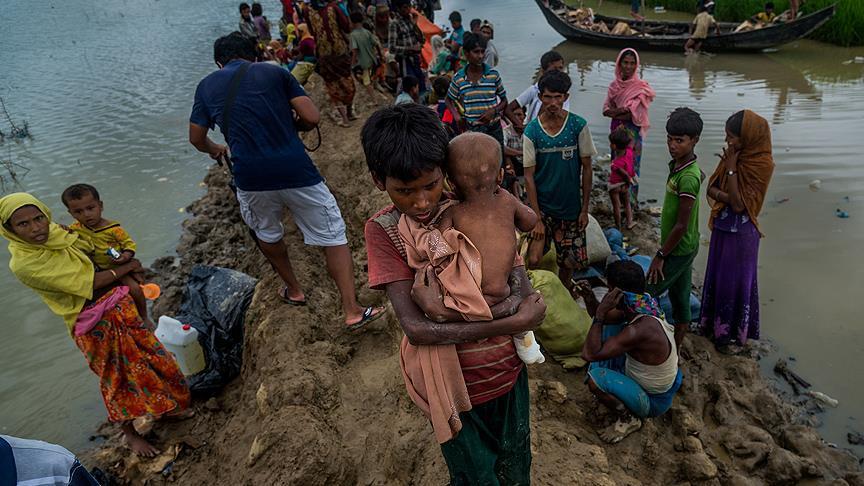
Aid agencies are warning of starvation in war-torn Myanmar’s Rakhine State, with the World Food Programme (WFP) making an urgent appeal for more donations to avoid a full-blown disaster.
The agency has been trying to feed the rapidly rising number of displaced people in the state, including the 140,000 Rohingya Muslims who have been living in camps since they fled their homes during communal fighting in 2012.
Recall that the civil war which was ignited by the 2021 military coup has destroyed the economy across much of Myanmar and created huge humanitarian needs.
But the situation in Rakhine, which has been cut off from the rest of the country because of a military blockade, is significantly worse than other areas.
A 50-year-old father living in the Ohn Taw Kyi camp, on April 20 added insecticide to his food and that of his wife and two children and he died, but the quick intervention of his neighbours saved the lives of the others.
This is the largest of the camps housing displaced Rohingya and is situated along the road heading west from the Rakhine State capital Sittwe.
Four people who spoke to newsmen have confirm the account from Sittwe that food had become so scarce the family was starving.
In June an ethnic Rakhine family of five living in Sittwe is reported to have died the same way.
Last week an elderly couple who had been displaced by the recent fighting between the Myanmar military and the insurgent Arakan Army are reported to have hanged themselves in despair over their lack of funds and food.
A building in Rakhine State that was destroyed in an airstrike
Also reported a 60% drop in its worldwide funding this year compared with 2024, and says it can feed only 20% of those in Myanmar facing severe food insecurity.
In March, it was forced to cut aid to Rakhine despite a dramatic rise since the beginning of the year in the number of families unable to support themselves.
“People are trapped in a vicious cycle – cut off by conflict, stripped of livelihoods, and left with no humanitarian safety net,” said Michael Dunford, the WFP Representative in Myanmar.
“We are hearing heartbreaking stories of children crying from hunger and mothers skipping meals. Families are doing everything they can, but they cannot survive this alone.”
Rakhine was already badly affected by the violence in 2012, and then the killing and mass expulsion of Rohingyas in 2017.
Then in 2023 the military blocked all trade and transport routes to the rest of the country to try to cut supplies to the Arakan Army, an insurgent group that has advanced quickly to take over most of the state.
Sittwe is now besieged and accessible only by sea and air. Farmers have given up harvesting their rice crops because they can no longer access buyers.
Rohingyas are barred by the military from going to sea to fish, one of their few sources of food and income.
And even when they have funding, international aid agencies cannot get to most of the areas now controlled by the Arakan Army.
”People can’t go out. There are no jobs. Prices have increased fivefold,” one camp resident told the BBC. “There is no income, so they are really struggling to make ends meet. Most people survive now by eating boiled taro roots.”
The military’s demand for conscripts to fight against the Arakan Army has imposed an additional burden. Thousands of Rohingya men have been enlisted to help defend Sittwe, and those families who have not sent a man to join up must help pay to support those who have.
Mohammad, a Rohingya living in one of the camps near Sittwe, told the BBC that families usually pay this from the allowance they get from the WFP.
This was stopped in March, but even when it resumed in June, he said many families needed to use all their allowance to pay off the debts they had run up.