Prime Minister Mette Frederiksen’s Social Democrats won the most votes in Tuesday’s Danish general election but slumped to its weakest performance since 1903, as her coalition bloc failed to secure a majority.
With 21.9% of the vote, Frederiksen’s party still has by the far the most seats, but her left-wing grouping has fallen well short of the 90 seats needed to form a majority.
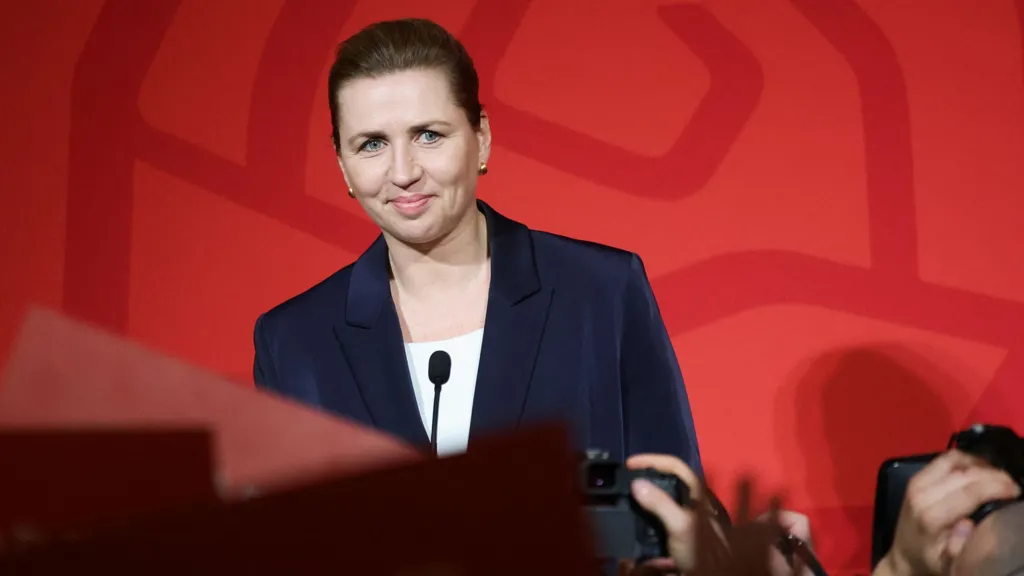
The Social Democrats have been in power since 2019, and Frederiksen told cheering supporters she was sorry that we did not get more votes.
In a message of defiance, she added: “There is nothing today that can make me sad that the Social Democrats have once again become the Danes’ absolute favourite political party.”
The Social Democrats’ main right-wing rival, the Liberal party Venstre, also had its worst showing for a century, with just 10.1%, falling behind the Green Left SF.
Frederiksen still has a chance to stay in power for a third term, however Denmark is typically run by coalition governments, and so tough negotiations – which could take days or weeks – now loom.
Twelve different political parties were on the ballot paper, and this tightly contested race has come right down to the wire.
Claiming a total of 84 seats, the red bloc of left-wing parties have clinched a small lead over the blue bloc on the right, who have 77 seats combined.
Both blocs have fallen short of the 90 seats that are needed for a majority in Denmark’s 179-seat parliament.
It is not yet clear which bloc will be able to build a majority.
“I have been responsible for this wonderful country for almost 7 years,” Frederiksen continued. “I am still ready to take on responsibility as Denmark’s prime minister.”
However, the Moderates, a small party holding 14 seats in the middle, now have the power to act as kingmaker, and all eyes are on its leader, former Prime Minister Lars Løkke Rasmussen.